

If you’re sorting through your options for medication-assisted treatment, just know it’s completely normal to feel a bit overwhelmed. Making sense of Vivitrol vs Sublocade takes courage, and it’s a big step toward protecting your recovery. Each medication works in a very different way, offering distinct paths to help your brain heal and reduce cravings. Understanding how they compare can make it much easier to choose what feels right for you or someone you care about.
What is medication-assisted treatment?
Medication-assisted treatment is a highly effective, evidence-based approach to recovery. It combines FDA-approved medications with counseling and behavioral therapies. This combination treats the whole person, not just the physical symptoms of addiction. For many people, these treatments offer a vital bridge to long-term sobriety.
When you explore a MAT injection comparison, you will notice a major benefit. Monthly shots remove the daily burden of taking medications. You do not have to remember to take a pill every single day. This simple change helps many people stay consistent with their recovery plan. It also provides a steady dose of medication to keep cravings at bay.
Understanding the difference between naltrexone vs buprenorphine is a great starting point. These are the active ingredients in the two most common monthly injections. They target opioid use disorder in very different ways. While the medication does the heavy lifting biologically, true healing requires more.
Medication works best when paired with a peaceful therapeutic environment. At Lanier Recovery Center, we offer MAT programs in Georgia that include robust counseling support. Our North Atlanta suburban setting provides the perfect balance. You get the separation you need from urban stressors, while staying close enough for family involvement.
Sublocade vs. vivitrol: key differences explained
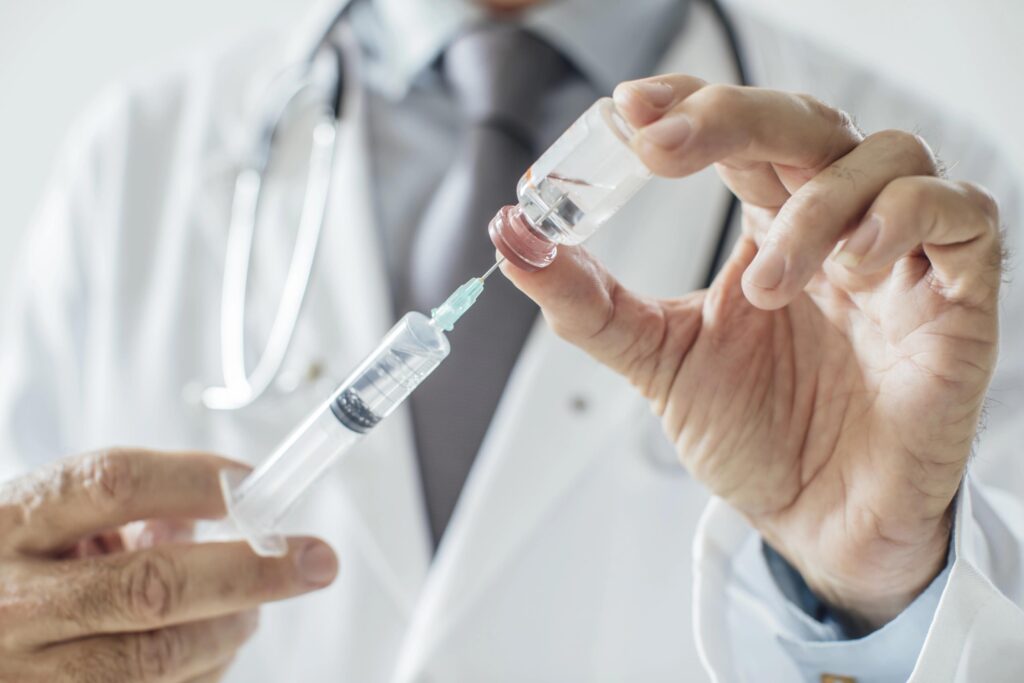
Sublocade and Vivitrol are both monthly, extended-release injections. They are highly effective for treating substance use disorder. However, they work in fundamentally opposite ways. Sublocade partially activates opioid receptors to curb cravings. Vivitrol completely blocks those receptors instead.
Understanding the vivitrol vs. Sublocade comparison starts with basic brain chemistry. These two monthly injections handle your opioid receptors in fundamentally opposite ways. Think of your brain receptors as unique biological locks. Sublocade uses buprenorphine to gently curb your daily cravings. It partially activates your brain’s opioid receptors. This gives just enough stimulation to stop withdrawal without causing a high. It satisfies the brain’s physical demand safely.
| Feature | Sublocade | Vivitrol |
|---|---|---|
| Active ingredient | Buprenorphine (partial opioid agonist) | Naltrexone (opioid antagonist) |
| How it works | Binds to and partially activates receptors to reduce cravings and withdrawal. | Blocks opioid receptors, making it impossible to get “high” from opioids or alcohol. |
| Addiction foci | Opioid Use Disorder (OUD) only. | Opioid Use Disorder (OUD) and Alcohol Use Disorder (AUD). |
| Pre-treatment requirements | Patient must be stabilized on daily buprenorphine (e.g., Suboxone) for at least 7 days. | Patient must be completely detoxified from all opioids for 7 to 14 days before starting. |
| Withdrawal & abuse risk | Carries a mild risk of physical dependence and withdrawal upon stopping. | Non-addictive, with zero potential for abuse or physical dependence. |
| Administration | Subcutaneous injection in the abdomen. | Intramuscular injection in the gluteal muscle (buttock). |
Active ingredients: naltrexone vs. buprenorphine
Understanding the active ingredient helps explain how each medication works. Buprenorphine is a partial opioid agonist. This means it binds to receptors in your brain and activates them only slightly. This partial activation stops withdrawal symptoms and reduces cravings. However, it has a built-in ceiling effect. It will not produce the dangerous highs associated with other opioids.
Naltrexone is an opioid antagonist. It does not activate your brain receptors at all. Instead, it acts like a heavy shield. It covers the receptors completely. If a person tries to use opioids while on naltrexone, they will not feel any euphoric effects. Comparing naltrexone vs buprenorphine is essentially comparing a blocker to a partial activator.
Key targets of addiction treatment
These medications also serve different treatment paths based on your specific needs. Sublocade is prescribed exclusively for opioid use disorder. It is an excellent choice for individuals who need active help managing ongoing cravings. If you are exploring Sublocade treatment, your doctor will evaluate your opioid history closely.
Vivitrol serves a dual purpose. It’s FDA-approved for both opioid use disorder and alcohol use disorder. Because it blocks the rewarding effects of alcohol, it reduces the urge to drink. This makes it a highly versatile option for individuals facing either challenge, or sometimes both.
Pre-treatment requirements
Starting a monthly injection requires careful medical planning. You cannot simply walk into a clinic and receive a shot on day one. The detox requirements are strict, and they exist for your safety. Each medication demands a unique period of transitions.
If you choose Sublocade, you must stabilize your system first. Patients are required to take a daily oral buprenorphine medication, like Suboxone, for at least seven days. This shows your doctor that your body tolerates the medication well. It also ensures you are on the correct dose before receiving a long-acting injection. A professional detox Atlanta program can help you navigate this initial stabilization phase safely.
Vivitrol requires a completely different approach. Patients must be fully detoxified from all opioids for 7 to 14 days before their first injection. This is a critical caution. Taking Vivitrol prematurely will trigger instant, severe withdrawal symptoms. Because it is a pure blocker, it aggressively knocks any remaining opioids off your receptors.
Switching between these medications also requires patience. If you transition from Sublocade to Vivitrol, you must wait at least two weeks after your last Sublocade dose wears off. Your system must be entirely clear of buprenorphine. Rushing this transition risks intense, hospital-level withdrawal symptoms.
Considerations for discontinuing treatment
Eventually, you and your doctor may decide to stop the injections. It’s important to know what happens when you discontinue treatment. Vivitrol is completely non-addictive. It has zero potential for physical dependence. When you stop taking it, you will not experience any chemical withdrawal symptoms. However, your risk of relapse may increase without the blocker in place.
Sublocade is slightly different. Because it contains buprenorphine, it carries a mild risk of dependence. Stopping it abruptly can cause mild withdrawal symptoms. Fortunately, the medication leaves your body very slowly over several months. This natural tapering effect makes the process much gentler. Research shows that structured tapering greatly improves long-term success.
Comparing side effects: sublocade vs. vivitrol
Like all medications, MAT injections come with potential side effects. Most people tolerate these treatments very well under careful medical supervision. However, comparing side effects is a crucial part of your decision.
Injection site reactions are very common for both medications. Sublocade is given as a subcutaneous injection in the abdomen. This often leaves a small, solid bump under the skin that fades over time. Vivitrol is administered as an intramuscular injection in the gluteal muscle. You may feel soreness or bruising in your injection area for a few days.
Both medications carry warnings regarding liver issues. Your doctor will monitor your liver function before and during treatment. This ensures the medication is not causing any unusual stress to your organs. If you are entering a vivitrol treatment program, routine blood tests are standard practice.
Sublocade carries a specific, severe boxed warning. It must never be injected intravenously. If the gel-like substance enters a vein, it can form a solid mass. This can cause life-threatening blood clots or lung damage. Because of this risk, Sublocade is only available through a restricted medical distribution program. You cannot take it home from a pharmacy.
Here is a breakdown of what to expect:
Mild side effects of Sublocade include:
- Constipation and nausea.
- Headache and fatigue.
- Minor itching or redness at the injection site.
- Occasional vomiting during the first few days.
Mild side effects of Vivitrol include:
- Cold-like symptoms, such as a runny nose.
- Trouble sleeping or mild anxiety.
- Muscle cramps and joint pain.
- Decreased appetite and mild nausea.
Serious Side Effects to watch for:
- Signs of liver damage, like yellowing eyes or dark urine.
- Severe allergic reactions, including facial swelling or difficulty breathing.
- Intense depression or new suicidal thoughts.
- Uncontrollable pain at the injection site.
Always report any unusual symptoms to your doctor immediately. They can help you manage mild discomfort or adjust your care plan safely.
Evaluation of costs for MAT injections
Cost is a valid concern for anyone seeking addiction treatment. Both Sublocade and Vivitrol are premium, long-acting injections. They involve advanced drug delivery systems. Because of this, they can be costly without health insurance.
Thankfully, the Affordable Care Act classifies substance use treatment as an essential health benefit. This means most health insurance plans offer coverage for Medication for Addiction Treatment. Medicaid and commercial insurance plans generally cover both injections. However, the exact amount you pay depends entirely on your specific policy.
Medicaid typically covers these injections with very low or zero out-of-pocket costs. Commercial insurance plans vary much more. You might have to meet a deductible first. Some plans also require prior authorization. This means your doctor must prove the medication is medically necessary before the insurance agrees to pay.
Both medication manufacturers offer specific savings programs. These programs exist to improve access to care. Alkermes offers the Vivitrol Co-pay Savings Program. Indivior provides the InSupport Copay Assistance Program for Sublocade. If you have commercial health insurance, these programs can lower your out-of-pocket medication cost to almost zero. Please note that government-funded insurance, like Medicare or Medicaid, is not eligible for these specific manufacturer coupons.
We highly recommend taking time for a thorough evaluation of costs. Call your insurance provider to ask about your specific pharmacy and medical benefits. You can also explore our MAT programs in Georgia to learn more about navigating treatment costs. Verifying your coverage early takes the stress out of the process. It allows you to focus purely on your recovery journey.
Which is better for you?
Choosing between these two medications requires careful thought. There is no single correct answer for everyone. Making an informed decision depends heavily on your individual history. Your personal motivation and professional medical guidance are essential.
Recovery is highly achievable with the right support. You should never feel like you have to make this choice alone. A qualified addiction specialist will review your past treatment experiences. They will discuss your living environment, your mental health, and your daily stressors. This comprehensive approach ensures you pick the safest, most effective path forward.
Your doctor will weigh several personal health factors during your consultation. Some key decision points include:
- Your substance history. If you struggle with alcohol use disorder, Vivitrol is the clear choice. If you only face opioid use disorder, both are viable options.
- Your detox readiness. Can you safely navigate a 7-14 day full detox? If so, Vivitrol is an option. If withdrawal symptoms are too severe, stabilizing on Sublocade might be safer.
- Your need for craving management. Do you need immediate, strong craving relief? The partial agonist in Sublocade helps manage this.
- Your dependency risks. Are you ready for a medication with zero physical dependence? Vivitrol offers a clean break from all opioid receptor activation.
Medication is just one piece of the puzzle. True healing involves combining your injection with active therapy. Building strong support systems is what makes recovery last.
At Lanier Recovery Center, we believe in a holistic, community-rooted approach. Located near Lake Lanier and the North Atlanta corridor, our center offers a peaceful environment to heal. We pair robust MAT programming with group support and deep individual therapy Atlanta residents can trust.
Vivitrol vs sublocade: finding the right med for you
Choosing the right medication is a deeply personal step, but you do not have to figure it out by yourself. Whether a partial activator or a full blocker fits your life best, both paths offer a strong foundation for healing. Combining the right medication with compassionate therapy gives you the best possible chance at long-term wellness. If you have questions about your insurance or want to discuss a tailored treatment plan, we are ready to listen. Reach out to our admissions team at (470) 470-5697 or visit our verify insurance page to see your coverage options. You can always learn more about our approach at Lanier Recovery Center. Let us help you find a safe, supportive path forward today by contacting us now.